
Skip to content

What was the Missouri Compromise?

What was the Missouri Compromise?

By the time Alabama was admitted to the Union (December 1819), the Senate was divided evenly between the representatives of eleven “free states” (i.e. states that prohibited slavery, viz. Massachussetts, New Hampshire, Vermont, Rhode Island, Connecticut, New York, New Jersey, Pennsylvania, Ohio, Indiana, and Illinois) and eleven “slave states” (Delaware, Maryland, Virginia, North Carolina, South Carolina, Kentucky, Tennessee, Georgia, Louisiana, Mississippi, and Alabama). Missouri yet remained outside of the Union of states. Why? Alabama had been allowed to join, mostly without incident. Kentucky, Tennessee, Louisiana, and Mississippi had all been accepted before that, also without much ado. So why all the fuss specifically focused on Missouri?

Look at a map. There was no doubt about the status of a state like Alabama, or Mississippi, situated as they were in the deep South. But  the vast majority of Missouri’s eastern border was shared by…Illinois! Missouri’s geographic location so far north was of great concern to the inhabitants of Northern states; would Missouri set a precedent for future states carved out of what was once the Louisiana Purchase? Was slavery to spread its tentacles far into the North, perhaps even one day hemming in the “free” states completely? Look at the map again. If admitted, Missouri would be the first state carved completely from territory lying west of the Mississippi River. Was the transcontinental future to be mired in slavery? Was that institution—and, perhaps more importantly, the politics of the South—to be spread north and west without any sort of check?

By early 1820, Congress had divided into obvious and sectional factions on the Missouri Question. Northerners, in particular those from New York and New England, openly attacked Missouri—and the South generally. Southerners, as a block, rushed to the defense of Missouri and their slave-dependent economic system. The impasse dominated national politics until 3 March, when, in large part thanks to the machinations of Speaker of the House Henry Clay, a multi-faceted legislative deal emerged known as the Missouri Compromise. The Compromise was made up primarily of the following concessions:

  • Missouri would join the Union as a slave state, but
  • Maine, carved out of Massachusetts, would join the Union as a free state. However,
  • a line would be established running along 36 degrees 30 minutes latitude (i.e. 36°30′, the southern border of Missouri); as far as the Louisiana Purchase territory was concerned, any state created south of that line was permitted to practice slavery, but any state created north of it (excepting Missouri) was to be free.
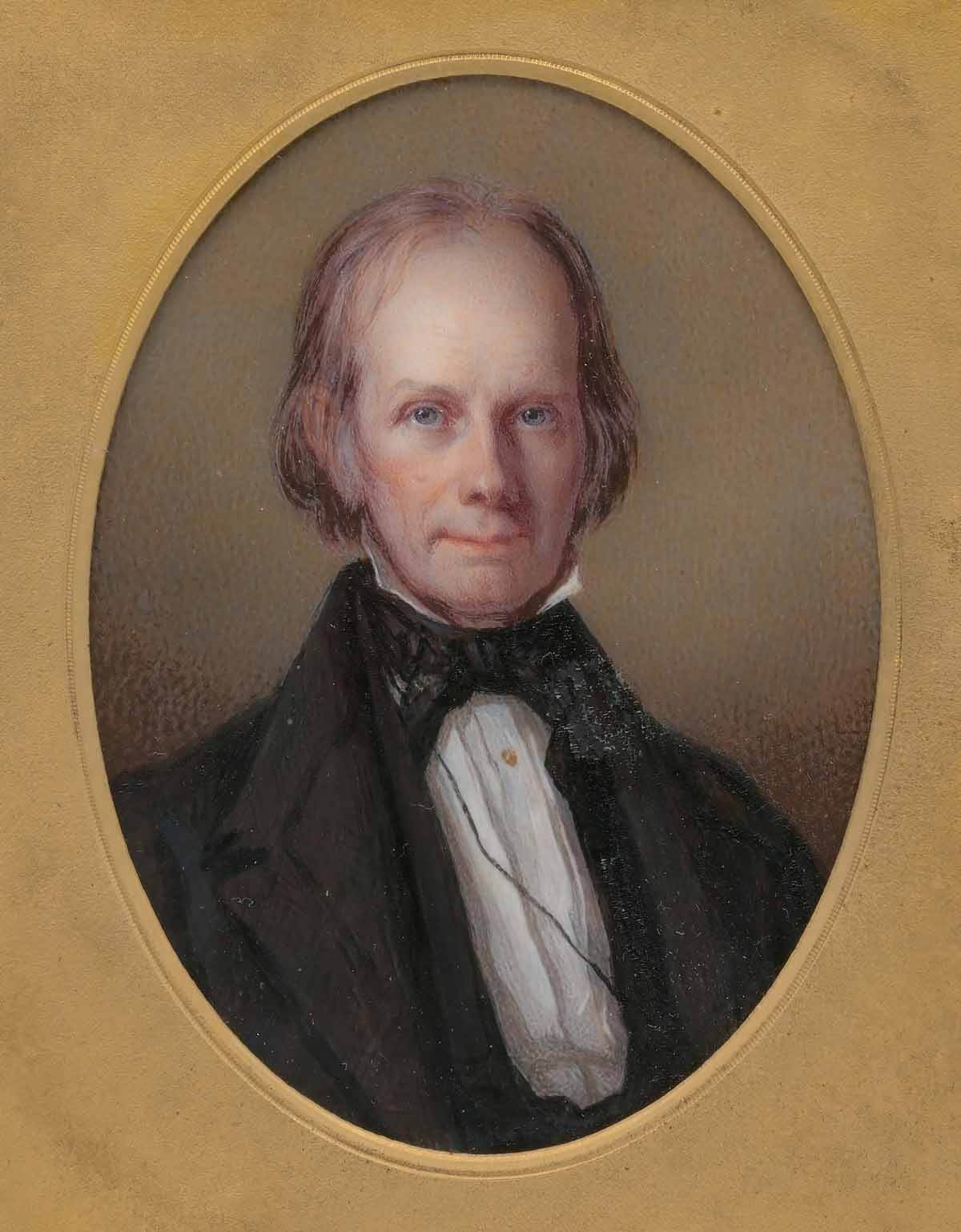
Henry Clay – Considered to have orchestrated both the Missouri Compromise and the so-called “Second Missouri Compromise” (portrait by Savinien Edme Dubourjal, c. 1845)
Maine’s admittance to the Union kept the number of “slave” and “free” states even, to the apparent satisfaction of both sections. Southerners concerned that the vast majority of what remained of the old Louisiana Purchase territory had now been declared forever slave-free were at least partly assuaged by the assurance that Missouri, at least, would be admitted as a slave state. This legislation was signed into law by President Monroe on 6 March.

But when Missouri’s proposed constitution reached Washington (the state’s constitution still needed to be approved by Congress in order for Missouri to be admitted to the Union), many in Congress were taken aback by a provision prohibiting the entry of free blacks into the new state. Missourians, it seemed, wished to limit blacks in their state to those who were enslaved. Why would such a provision exist? Perhaps we can glean a part of the answer from an 1833 proclamation published and signed by an influential group of western Missouri residents—including local businessmen, law enforcement officials, judges, justices of the peace, and militia leaders. The proclamation, which was meant to justify the forced removal of Mormon settlers (about whom more later) who were seen as attracting free blacks to the region, read in part:

[T]he introduction of such a caste amongst us [i.e. free blacks] would corrupt our blacks, and instigate them to bloodshed… [W]e believe it a duty…to remove them [the Mormons] from among us, as we are not prepared to give into the bosom of our families…the degraded and corrupted free negroes and mulattoes that are now invited to settle among us.

Some Missourians, at least, thus considered free blacks an actual danger to white slaveholders; might the presence of this group stir up enslaved blacks to rebellion? Apparently, too, some prominent whites here considered blacks as, generally speaking, morally (or otherwise) “degraded and corrupted.” According to this worldview, blacks represented a population which, if allowed “into the bosom of [Missourian] families,” would naturally degrade and corrupt white society. Here was an unambiguous declaration of white cultural supremacy.

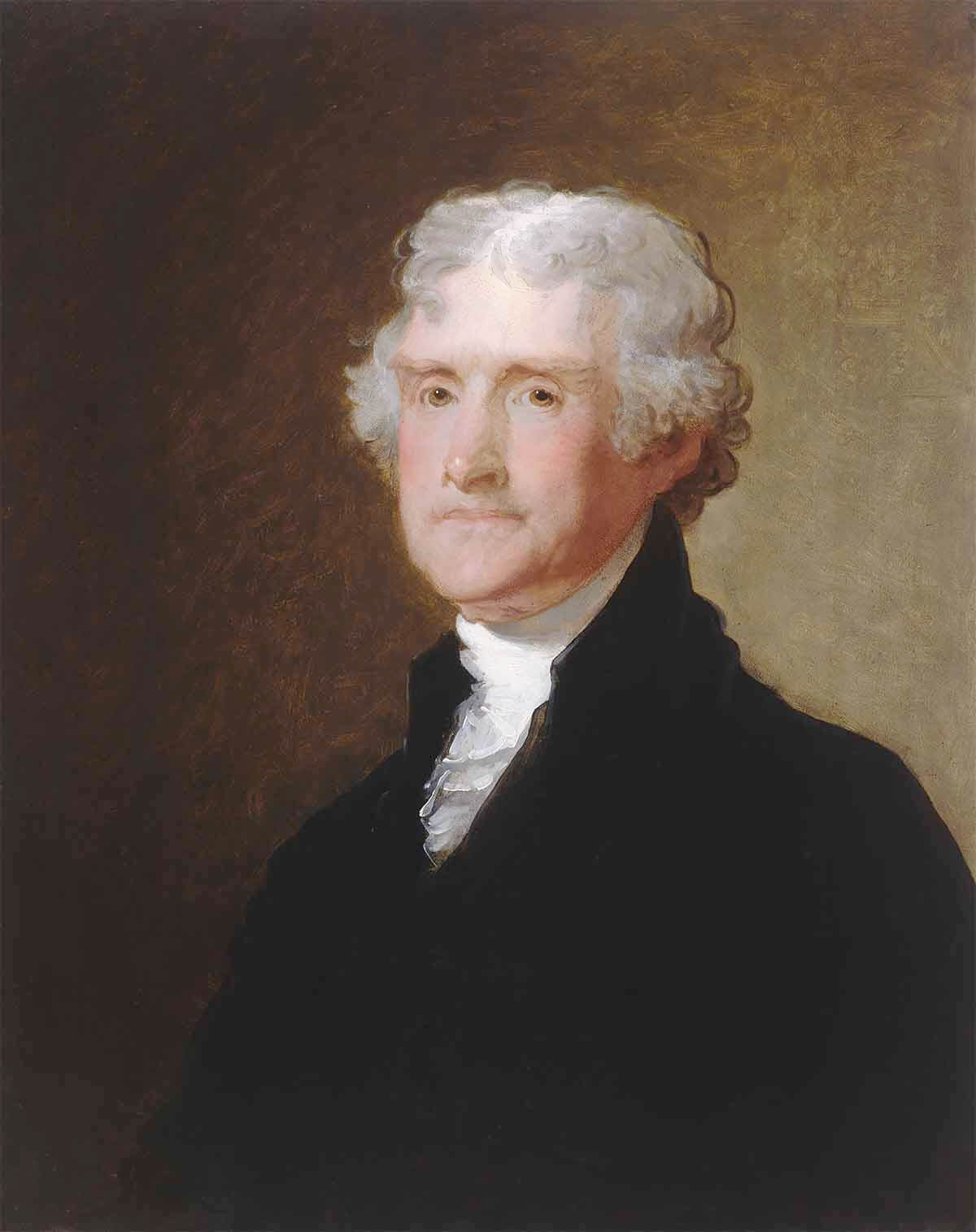
Thomas Jefferson interpreted the Missouri Compromise as “a firebell in the night” and the “knell of the Union.” (Painting by Gilbert Stuart, 1821)

Many Northerners decried this provision in the proposed Missouri constitution. Did it not violate the federal Constitution’s Privileges and Immunities Clause, which entitled the citizens of each state “all privileges and immunities of citizens in the several states”? After all, free blacks did enjoy citizenship, and the privileges and immunities connected to it, in several Northern states. This provision must be removed, these Northerners demanded, before Missouri’s constitution could possibly be approved. Though the Senate voted to admit Missouri to the Union without removing the language (December of 1820), things stalled in the House. 

The Missouri Compromise

Once again, Henry Clay managed to hammer out a compromise between the various sections. “Restrictionist” Northerners (i.e. those who wanted to restrict the spread of slavery) were promised that Missouri’s General Assembly would pass a “solemn public act” promising never to interpret the prohibition against free black entry to endorse a law curtailing the privileges and immunities of citizens of the United States. If this sounds confusing and ambiguous, that’s because it was, and purposefully so. When President Monroe signed Missouri’s admission bill on 2 March, 1821, it was contingent upon the new state’s immediate passage of the “solemn public act.” Was this merely a nebulous phrase meant to assuage the consciences of those on both sides and see the matter over and done with? Perhaps. 

Missouri’s entrance—and, far more importantly, the geographical split accompanying it—seemed to foreshadow a future division. It also seemed to place Missouri (and all future states carved out of the Louisiana Purchase) in a sort of second-class condition; the original states’ slave laws hadn’t been dictated to them by some federal authority, but had, instead, been instituted by the people of those states. Going forward from the Missouri Compromise, what were the political connotations of setting additional preconditions for certain states that hadn’t been set for the original states?

I filmed the video below at the Mason-Dixon Line. For a refresher on this, watch this video (links to an external site.) from US1 5.1 on the founding of Maryland.

Mason-Dixon Line: Missouri Compromise

Sign up now for The Nomadic Professor’s newsletter to unlock 9 free research tools. Also receive course updates, learning tips, and exclusive offers!

The Nomadic Newsletter

Sign up now for The Nomadic Professor’s newsletter to unlock 9 free research tools. Also receive course updates, learning tips, and exclusive offers!

Session Feedback

Comments, corrections or questions on this session? Typos, broken links, unclear instructions? Exceptional content? Whatever it may be, we’d appreciate you sharing your feedback here.

Please note that this form is not required. If you do not have any feedback on this session, feel free to move on to the next!

Purchase: Bulk Discounts

Number of seats
Discount
Purchase per seat
1
$249
2–4
–25%
$186.75
5–9
–30%
$174.30
10–19
–35%
$161.85
20+
–40%
$149.40

Subscription: Bulk Discounts

Number of seats
Discount
Subscription per seat
1
$30 / month
2–4
–25%
$22.50 / month
5–9
–30%
$21 / month
10–19
–35%
$19.50 / month
20+
–40%
$18 / month

Comments? Corrections? Questions? Exceptional content? Whatever it may be, we’d appreciate you getting in touch.

Reach out to The Nomadic Professor!

Comments? Corrections? Questions? Exceptional content? Whatever it may be, we’d appreciate you getting in touch.

Free Course Previews

Sign up now for free access to sample sessions of The Nomadic Professor’s courses!